Known For
The Philco Television Playhouse is an American anthology series that was broadcast live on NBC from 1948 to 1955. Produced by Fred Coe, the series was sponsored by Philco. It was one of the most respected dramatic shows of the Golden Age of Television, winning a 1954 Peabody Award and receiving eight Emmy nominations between 1951 and 1956.
An American radio–television anthology series, created in 1947 by Canadian director Fletcher Markle, who came to CBS from the CBC. Studio One, presented by Westinghouse, was one of the first of the anthology TV programs. The episodes were often abridged remakes of movies from years gone by and many future well-known television and movie actors appeared in the productions.
Robert Montgomery Presents is an American dramatic television series which was produced by NBC from January 30, 1950 until June 24, 1957. The live show had several sponsors during its seven-year run, and the title was altered to feature the sponsor, usually Lucky Strike cigarettes, for example, Robert Montgomery Presents Your Lucky Strike Theater, ....The Johnson's Wax Program, and so on.
Armstrong Circle Theatre is an American anthology drama television series which ran from 1950 to 1957 on NBC, and then until 1963 on CBS. It alternated weekly with The U.S. Steel Hour.
Omnibus is an American, commercially sponsored, educational television series.
Kraft Television Theater is an American, well-received anthology series presenting live television dramas.
In the Salinas Valley in and around World War I, Cal Trask feels he must compete against overwhelming odds with his brother for the love of their father. Cal is frustrated at every turn, from his reaction to the war, how to get ahead in business and in life, and how to relate to his estranged mother.
The United States Steel Hour is an anthology series which brought hour-long dramas to television from 1953 to 1963. The television series and the radio program that preceded it were both sponsored by the United States Steel Corporation.
Photo Gallery


Movie Credits (73)
A wild journey into the origins of The Rocky Horror Picture Show, the biggest cult film of all time, its impact on popular culture and socio-political resonance to this day.
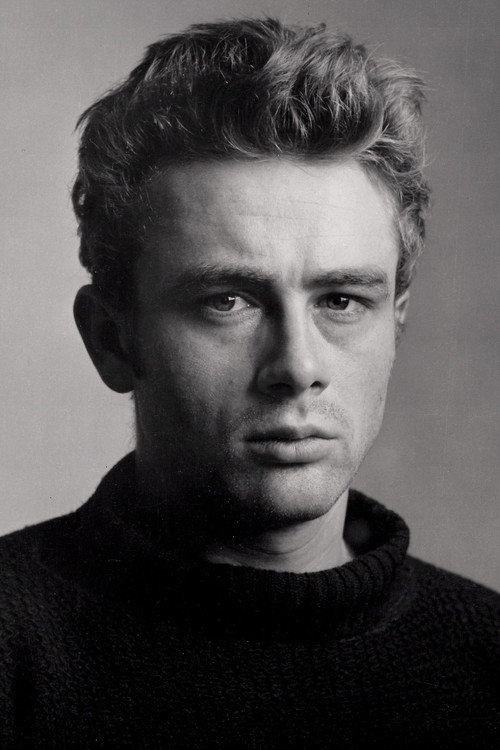
The antithesis of the virile heroes of his era, James Dean shook up the representation of adolescence and masculinity in three films shot in 1955, the same year he died in a car accident at the age of 24—exactly seventy years ago: Rebel Without a Cause, East of Eden, and Giant. This meteoric rise made him an instant icon, frozen in eternal, rebellious youth, which still resonates strongly today.
Newly discovered interviews with Elizabeth Taylor and unprecedented access to the star’s personal archive reveal the complex inner life and vulnerability of the groundbreaking icon.
This timely exploration of Hollywood and LGBTQ+ identity examines the life of legendary actor Rock Hudson, from his public "ladies' man" persona to his private life as a gay man.
Multi-talented, Paul Newman is one of the greatest American actors of all time. With his silhouette of a Greek statue and his unreal blue eyes, he embodied the quintessential Hollywood star. But he never seemed satisfied. The son of a Jewish sporting goods retailer who despises him and a Catholic mother who adores him, driven by self-doubt and an inherited need for approval from his childhood, he has worked throughout his fifty-year career to break the image of the pretty boy. He made his first experiences in the famous Actors Studio. The breakthrough as a screen star came in 1958 with "Cat on a Hot Tin Roof". From then on he preferred characters on the edge of the American dream. With archive images and film excerpts, the documentary paints a portrait of a socio-politically committed man with many facets and also pays tribute to the role of his wife Joanne Woodward.
Armed with a limitless Rolodex and a Benedict Canyon enclave with its own disco, Allan Carr threw the Hollywood parties that defined the 1970s. A producer, manager, and marketing genius, Carr built his bombastic reputation amid a series of successes including the mega-hit musical film "Grease," until it all came crashing down after he produced the 1989 Academy Awards, a notorious debacle.
"Children of 'Giant'" is a documentary film that unearths deeply wrought emotions in the small West Texas town of Marfa, before, during and after the month-long production of George Stevens' 1956 feature film, "Giant." Based on the controversial Edna Ferber novel of the same name, the film, "Giant" did not shy from strong social-issue themes experienced throughout post-WWII America. George Stevens, its producer and director, purposely gravitated to the drought-ridden community of Marfa for most all of the exterior scenes.
Throughout the 1950s, Tab Hunter reigned as Hollywood’s ultimate male heartthrob. But throughout his years of stardom, Tab had a secret. Tab Hunter was gay, and spent his Hollywood years in a precarious closet that repeatedly threatened to implode and destroy him. Tab Hunter himself shares first hand, for the first time, what it was like to be a studio manufactured movie star during the Golden Age of Hollywood and the consequences of being someone totally different from his studio manufactured image.
Although he'd starred in just three films before his untimely death at age 24, James Dean cast a long shadow that came to define cool. Using excerpts from Dean's personal diaries, found footage from screen and wardrobe tests and interviews with those who knew him best (including Dennis Hopper, Dick Van Patten, Graham Nash and Rod Steiger), this fascinating documentary explores the screen icon's lingering mystique.
The collar of his coat turned up in New York: Images which have collaborated on building a myth – the image of eternal and misunderstood youth. Unlike Marlon Brando, the proletarian rebel with identifiable goals, James Dean was the timeless and androgynous youthful rebel. His death on the Interstate 46 leads us back to 1950s America, a time when youth was re-interpreted all anew.
A brief career. A timeless stardom. In just three major movie roles, James Dean became an icon for the ages. Now his legacy shines even brighter thanks to this fascinating film that, filled with an astonishing treasure trove of newfound or rare glimpses of Dean's TV performances, is like a road map to his meteoric success. Michael J. Sheridan directs and Martin Sheen narrates this revealing documentary showcased at the 2005 Cannes Film Festival. Movie clips, romances, photos that are part of our national DNA (and the stories behind them), and the small-screen work that paved the way to the big screen are all part of the James Dean you couldn't see until now. Forever young. Endlessly fascinating.
Documentary exploring the last 18 months of James Dean's acting career.
1955 - the year when The rip hunter is buried in snow for eight days before his ski pole with a movie ticket is discovered. Ingrid Bergman gets bad reviews as Joan of Arc, and James Dean dies in a 185 km/h car crash. The knappupgänget, with Povel Ramel and Gunwer Bergkvist, go to Nairobi to shoot a film that will never be finished. Sweden votes no to right-hand traffic and the "Motbok" disappears in October. Charlie Norman writes film music and gets a job in the US, while Sigge Eriksson becomes a world figure skating champion in Moscow. Anita Ekberg visits after years in Hollywood and Louis Armstrong gives concerts in Stockholm. Luleå is building the world's first indoor shopping center, and Viggen Viggo is visible on the TV screen.
The ultimate documentary on the death of James Dean. Explores the life, career, and tragic death of the Hollywood icon, recounting his passion for racing, the circumstances of his fatal crash, and investigating enduring questions and controversies surrounding the accident with modern forensic techniques and eyewitness accounts.
Rebel Without a Cause: Defiant Innocents is a documentary chronicling the production of the film.
Featuring the vintage films, and pictures that made her a phenomenon, BETTIE PAGE, THE GIRL IN THE LEOPARD PRINT BIKINI, focuses on the life and times of the legendary model, the times in which she lived, and the impact her career had on the subsequent fifty years.
James Dean: Born Cool tells the story of James Dean's rise from small town boy to immortal icon as told by Jimmy's closest family and friends from the perspective of his hometown of Fairmount, Indiana. Made with the full cooperation of the Dean Estate, Born Cool includes unprecedented access to hundreds of rare and never before seen photos and home movies, plus exclusive interviews with those who knew Jimmy best.
A 1998 retrospective documentary exploring the making and legacy of George Stevens’ Giant (1956). Featuring interviews with cast members, crew, and historians, it reflects on the cultural impact of the film and the experiences of those involved in its production.
In the summer of 1955, an army of cameramen, lighting techs and movie stars descended on the small, west Texas town of Marfa to film what has become, "the national movie of Texas."
TV Credits (19)
An anthology series based on the activities of clergymen from different denominations.
The United States Steel Hour is an anthology series which brought hour-long dramas to television from 1953 to 1963. The television series and the radio program that preceded it were both sponsored by the United States Steel Corporation.
The Campbell Playhouse (also known as Campbell Soundstage) is an American drama anthology television series that originally aired on NBC from June 6, 1952, to May 28, 1954.
You Are There is an American historical educational television and radio series broadcast over the CBS Radio and CBS Television networks.
General Electric Theater is an American anthology series hosted by Ronald Reagan that was broadcast on CBS radio and television. The series was sponsored by General Electric's Department of Public Relations.
Omnibus is an American, commercially sponsored, educational television series.
Long-running anthology program sponsored by Hallmark Cards. Beginning in 1951 and continuing into 2019, the series received 80 Emmy Awards, 24 Christopher Awards, 11 Peabody Awards, 9 Golden Globes, and 4 Humanitas Prizes. Early seasons were a weekly live drama, eventually transitioning to videotaped and then filmed productions broadcast as occasional specials.
Schlitz Playhouse of Stars is an anthology series that was telecast from 1951 until 1959 on CBS. Offering both comedies and drama, the series was sponsored by the Joseph Schlitz Brewing Company. The title was shortened to Schlitz Playhouse, beginning with the fall 1957 season.
Tales of Tomorrow is an American anthology science fiction series that was performed and broadcast live on ABC from 1951 to 1953. The series covered such stories as Frankenstein, starring Lon Chaney, Jr., 20,000 Leagues Under the Sea starring Thomas Mitchell as Captain Nemo, and many others featuring such performers as Boris Karloff, Brian Keith, Lee J. Cobb, Rod Steiger, Bruce Cabot, Franchot Tone, Gene Lockhart, Walter Abel, Leslie Nielsen, and Paul Newman. The series had many similarities to the later Twilight Zone which also covered one of the same stories, "What You Need". In total it ran for eighty-five 30-minute episodes.
Lux Video Theatre is an American anthology series that was produced from 1950 until 1959. The series presented both comedy and drama in original teleplays, as well as abridged adaptations of films and plays.
Armstrong Circle Theatre is an American anthology drama television series which ran from 1950 to 1957 on NBC, and then until 1963 on CBS. It alternated weekly with The U.S. Steel Hour.
Robert Montgomery Presents is an American dramatic television series which was produced by NBC from January 30, 1950 until June 24, 1957. The live show had several sponsors during its seven-year run, and the title was altered to feature the sponsor, usually Lucky Strike cigarettes, for example, Robert Montgomery Presents Your Lucky Strike Theater, ....The Johnson's Wax Program, and so on.
Based on a popular radio series, each show tells a different reporter's Big Story, a true story selected from newspapers across the United States. Comments from the actual reporter open and close each show but the permanent narrator drives the plot line and a featured actor dramatizes the reporter's role.
An American radio–television anthology series, created in 1947 by Canadian director Fletcher Markle, who came to CBS from the CBC. Studio One, presented by Westinghouse, was one of the first of the anthology TV programs. The episodes were often abridged remakes of movies from years gone by and many future well-known television and movie actors appeared in the productions.
The Philco Television Playhouse is an American anthology series that was broadcast live on NBC from 1948 to 1955. Produced by Fred Coe, the series was sponsored by Philco. It was one of the most respected dramatic shows of the Golden Age of Television, winning a 1954 Peabody Award and receiving eight Emmy nominations between 1951 and 1956.
Kraft Television Theater is an American, well-received anthology series presenting live television dramas.
