Known For
A samurai answers a village's request for protection after he falls on hard times. The town needs protection from bandits, so the samurai gathers six others to help him teach the people how to defend themselves, and the villagers provide the soldiers with food.
An English navigator becomes both a player and pawn in complex political games in feudal Japan.
A Yokohama shoe executive faces a wrenching choice when kidnappers mistakenly seize his chauffeur’s son but demand the ransom anyway.
V.I.P.-Schaukel is a 45 minute documentary-family-news-talk show starring Margret Dünser as Host. The series premiered on Sun May 09, 1971 on ZDF and Folge 37 - Final Show last aired on Fri May 09, 1980.
Four people recount different versions of the story of a man's murder and the rape of his wife.
In 1870, Japanese ambassador Sakaguchi and his entourage travel by train to Washington to deliver a valuable sword to the President of the United States, a gift from the Emperor of Japan. On board the same train are two robbers, Link and Gauche, ready to make their move…
A nameless ronin, or samurai with no master, enters a small village in feudal Japan where two rival businessmen are struggling for control of the local gambling trade. Taking the name Sanjuro Kuwabatake, the ronin convinces both silk merchant Tazaemon and sake merchant Tokuemon to hire him as a personal bodyguard, then artfully sets in motion a full-scale gang war between the two ambitious and unscrupulous men.
This war drama depicts the U.S. and Japanese forces in the naval Battle of Midway, which became a turning point for Americans during World War II.
Returning to their lord's castle, samurai warriors Washizu and Miki are waylaid by a spirit who predicts their futures. When the first part of the spirit's prophecy comes true, Washizu's scheming wife, Asaji, presses him to speed up the rest of the spirit's prophecy by murdering his lord and usurping his place. Director Akira Kurosawa's resetting of William Shakespeare's "Macbeth" in feudal Japan is one of his most acclaimed films.
In the days after the attack on Pearl Harbor, panic grips California, where a military officer leads a mob chasing a Japanese sub.
Photo Gallery


Movie Credits (167)
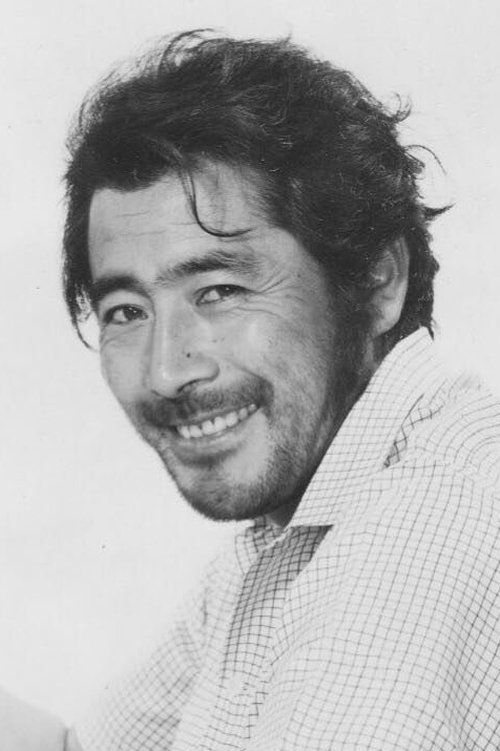
An account of the life and work of legendary Japanese actor Toshirō Mifune (1920-97), the most prominent actor of the Golden Age of Japanese cinema.
A film where anything can happen - the hero and the heroine changes their faces, age, look, names, and so on. The only same thing: The love between man and woman... in an archetypical love story cut from 500 classics from all around the world.
Documentary made by Toho for the Masterworks reissue of all of its Kurosawa films. This one focuses on "The Hidden Fortress" (1958).
Riyo, an orphaned 17-year old, sails from Yokohama to Hawaii in 1918 to marry Matsuji, a man she has never met. Hoping to escape a troubled past and start anew, Riyo is bitterly disappointed upon her arrival: her husband is twice her age. The miserable girl finds solace with her new friend Kana, a young mother who helps Riyo accept her new life.
A group of Japanese tourists try to forget their pasts and find themselves in India.
In the 1930s, Agaguk lives his traditional Inuit life. But one day, there is a murder in the tribe and Agaguk becomes a suspect. Soon he becomes persecuted by Henderson, a mean mountie, and he must flee through the cold winter of Northern Quebec.
The son of a besieged Shogun in war-torn 17th century Japan travels to Spain to buy weaponry from the king.
Hisa Ishii and his brother Akira emigrate from Japan to the United States. They settle in rural California and start a strawberry farm, slowly integrating themselves into the life of the community, which includes Japanese-Americans of both lengthy and brief residence.
Some of the greatest battles during the Age of Civil Wars were fought between the Uesugi and Takeda clans. Leading up to them was the incredible life of Uesugi Kenshin, who rose from a son out of favor with his...
Years after the death of legendary tea master Rikyu, his disciple Honkakubo attempts to resolve the mystery of the master's death.
The film is an adaptation of the novel of the same title by Takashi Kitajima.
Island villagers find a young woman and young man swept ashore near their remote village in northeastern Japan. The two have tried to escape the girl's enforced marriage to another man, in order that they may marry themselves. The ancient custom of the village decrees that the angry sea gods must be calmed by throwing the pair back into the sea. The lovers face being sacrificed to the sea gods or perhaps something even more difficult to bear.
Two poor, married farmers have recently lost their only child; after a freak visitation, they pry open an alien cocoon to greet their new daughter.
Japan's greatest jidaigeki star, Mifune Toshiro is Shogun's Advisor Okubo Hikozaemon who must be coaxed out of retirement to save Shogun Iemitsu from danger. The elderly Hikozaemon has been belittled of late and has seemingly lost the will to live, much less the desire to assert himself and make Iemitsu listen to reason. The plot thickens when a lovely young woman enters the picture. Can she change Hikozaemon's mind, and thus alter the path of Japanese history? No longer a young man, can Hikozaemon gain the shogun's ear, and succeed in warning him of the evil plot to overthrow him?
When his travels take him to rural Hokkaido, Tora-san helps a cantankerous old veterinarian (Mifune) in his relationships with his estranged daughter, and a woman in whom he is secretly interested.
Following the opening of a Japanese auto factory in Sicily, the head of the company is kidnapped by Sicilian mobsters. This was a co-production between Italy and Japan's Toho Studios.
A young woman's life is turned upside down when her husband suddenly disappears, leaving behind numerous debts and his illegitimate child. Desperate to track down her missing husband, she travels to Kyushu in hopes of finding clues to his whereabouts and in the process discovers disturbing secrets about the man she loves.
Released after seven years in prison, an inveterate thug goes from strength to ruthless strength as he makes his way through a succession of dubious jobs, illegal schemes, and brutal romances.
In Okinawa, a Japanese-Filipino gangster named Joe kills an Okinawan mobster. Joe temporarily escapes the pursuing mob by fleeing to the Philippines, hoping to find there safety and perhaps to link up with his father. He meets Yoko, a saloon girl, who looks after him, but soon Joe's enemies show up, determined to make Joe pay.
TV Credits (11)
The three Amaba brothers are second-generation Japanese Americans, whose allegiances are torn by the bombing of Pearl Harbor. Determined to show his loyalty to his adopted country, Isamu volunteers for the U.S. Army and is shipped off to fight in Europe. A second brother, studying in Japan at the outbreak of hostilities, is conscripted to fight against the Americans as a Japanese soldier. The third brother Kenji (Matsumoto) avoids conflict by enlisting as a military interpreter, in which capacity he witnesses the war crimes trials that followed Japan's defeat.
A four-episode TV drama commemorating the 30th anniversary of the start of television broadcasting, set in the automobile industry.
"Tuesday Suspense Theater" was broadcast every Tuesday from 21:00 to 22:54 ( JST ) on the Nippon Television network for 24 years from September 29 , 1981 to September 27, 2005. It was a two-hour drama slot. As a general rule, suspense dramas with one complete episode (very rarely, two parts) were broadcast every week from 21:00 to 22:54 ( JST ). It is a broadcast frame. Some episodes also aired horror, historical dramas, and special effects dramas.
Blockbuster drama based on the novel Sekigahara by Ryotaro Shiba, a program dedicated to the 30th anniversary of TBS. A total of 120 actors, 3,500 extras and about 500 horses recreated the largest battle in history, the Battle of Sekigahara, in which 200,000 warriors clashed from east and west. The battle, which can be called a turning point in the history of Japan, depicts the conflict, love and hate between people on a grand scale and with a great cast.
An English navigator becomes both a player and pawn in complex political games in feudal Japan.
Set in the eighteenth century, during the reign of the fifth Tokugawa shōgun Tokugawa Tsunayoshi. Akō-han is demolished by the Tokugawa shogunate. Hotta Hayato is a ronin who is living a desperate life because of his sad past. But one day he starts working for Chisaka Takafusa, the Chief retainer of the Uesugi clan. The Uesugi clan and Chisaka are wary of Ōishi Kuranosuke and Ako Roshi's movements, so Chisaka orders Hotta to observe Ōishi Kuranosuke.
In the 1770's, the shrewdest man of the age, Tanuma Okitsugu, had abused his political power, and the corruption of government officials and moral decay of the public were prevalent. At that time, there was a box for complaints made by the general public. It was called "Meyasubako" and was placed at the front gate of the central government's Supreme Court. The appeals went directly to the shogun who assigned the “Otakagumi” (Falconers Unit) to investigate. Led by Uchiyama Kanbei (samurai superstar Mifune Toshiro) they fought injustice and helped the oppressed. Not only were they skilled swordsmen, but their trained falcons would swoop down on enemy troops, especially those using firearms. Superb fighting throughout with Mifune at the forefront in one of his finest roles. As the vile Tanuma Okitsugu continues to abuse his political power, more and more clashes with the Falcons of Edo, who stand for justice and morality are bound to occur, leading to a conclusion the likes of which has never been seen. Putting his life on the line, time and time again, Uchiyama Kanbei fights to prevent Tanuma from destroying the falconers’ group and take him to task for his vicious treatment of the Japanese people. Aided by his trusty Vice-Chief Ichiyanagi Kakuto, he wades bravely into battle in a land where “Take no prisoners” is the mantra. Brilliant fighting and a clever story line create a highly charged action series that brings out the best in samurai cinema. Can the Falcons of Edo prevail and save Japan from being crushed underfoot!
A wildly unusual story set in the earliest days of the Meiji era. The story centers around a gathering place called The Mermaid Saloon, where scantily clad pearl divers put on a show while two residents of the inn upstairs...
Continuing the tradition of the Yojimbo movies, Mifune Toshiro stars as Toge Kujuro, a wandering ronin searching for his own fame and happiness. With a sense of justice, he travels the countryside, with his motley collection of outcasts - a pistol-carrying ronin, a two-bit con artist and woman seeking revenge, following close behind, unwittingly righting wrongs and protecting the common man.
V.I.P.-Schaukel is a 45 minute documentary-family-news-talk show starring Margret Dünser as Host. The series premiered on Sun May 09, 1971 on ZDF and Folge 37 - Final Show last aired on Fri May 09, 1980.
Daichūshingura is a television dramatization of the events of the Forty-seven Ronin. The first episode aired on January 5, 1971, and the 52nd and final episode appeared on December 28 of the same year. The NET network broadcast it in the Tuesday evening 9:00–9:56 prime-time slot in Japan. The series featured an all-star cast. The central actor was Toshiro Mifune, who portrayed Ōishi Kuranosuke; Yoko Tsukasa his wife; and kabuki actor Onoe Kikugorō VII their son Chikara.
